
Few things test an alliance quite like a war nobody agreed to join. What started as a U.S.-Israeli military campaign has rippled far beyond the Middle East, landing squarely in the offices of European heads of government, in the halls of NATO, and even at the Vatican. And for Italy and Spain, two of America’s closest military partners, the fallout has taken a deeply personal turn.
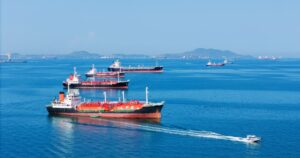
The flash point is the Strait of Hormuz, a narrow strip of water between Iran and Oman that most people rarely think about until it stops working. Right now, it has effectively stopped working. Ships that once moved quietly through it every day are anchored, rerouted, or simply staying away. The economic pain is spreading. And the question of who is responsible for fixing it has split the Western alliance in ways that are hard to walk back.
President Trump’s answer to European hesitation has been to threaten to pull U.S. troops from the very countries that host them. Italian Prime Minister Giorgia Meloni and Spanish Prime Minister Pedro Sánchez became the latest targets, joining Germany on a list of allies the White House has warned it may leave to fend for themselves. The backlash has been swift, public, and in some cases, genuinely surprising.
The Strait Nobody Can Ignore
Before getting into the politics, it helps to understand what the Strait of Hormuz actually is and why its closure matters to people who have never been anywhere near the Persian Gulf. The waterway carries around a quarter of global seaborne oil trade, along with significant volumes of liquefied natural gas and fertilizers. When it flows freely, it barely registers. When it doesn’t, the consequences show up at gas pumps, grocery stores, and factory floors worldwide.
Ship transits through the Strait dropped from around 130 per day in February to just 6 in March, a collapse of roughly 95%. Fatih Birol, the executive director of the International Energy Agency, has described the shipping crisis as “the largest supply disruption in the history of the global oil market.” According to a 2026 UNCTAD rapid assessment, global merchandise trade growth is projected to fall from about 4.7% in 2025 to between 1.5% and 2.5% in 2026, as the disruptions create a major supply shock, pushing prices up while weighing on demand.
The consequences are not limited to oil. Fertilizer represents one of the biggest downstream risks, with roughly one-third of global fertilizer trade transiting the Strait, including large volumes of nitrogen exports. Energy import costs for Europe alone have soared: European Commission President Ursula von der Leyen told the European Parliament that in just 60 days of conflict, the EU’s bill for fossil fuel imports increased by over €27 billion, “without a single molecule of additional energy.”
Trump Turns the Pressure on His Allies
Trump’s position has been consistent. He wants European navies at the Strait. He has criticized NATO allies for not sending their navies to the Strait of Hormuz, describing it as an important commercial shipping route that needed protecting. When European governments declined to get directly involved, the response from the White House was to publicly humiliate them. When Europe declined to send warships to help open the Strait of Hormuz, Trump called NATO “useless” and “cowards.”
The administration pressed European allies to provide more direct support for operations tied to the Iran conflict, including broader access to bases and participation in efforts to secure key waterways. But several countries stopped short. Spain imposed restrictions on how U.S. forces could use jointly operated bases, while Italy allowed American troops to continue operating from its territory but limited how those facilities could be used for certain missions.
Italy, led by Trump ally Prime Minister Giorgia Meloni, refused to allow the U.S. to use an air base in Sicily for planes carrying weapons to Iran. Spanish Prime Minister Pedro Sánchez has vocally opposed the conflict, describing initial U.S. and Israeli strikes as “illegal” and denying American forces access to Spanish military bases and airspace for Iran operations.
Trump’s response was to threaten to remove the thousands of American troops based in both countries. Speaking in the Oval Office, Trump told reporters that “Italy has not been of any help to us and Spain has been horrible, absolutely horrible.”
How Large Are the U.S. Footprints at Risk?
The numbers involved are significant. There are 36,436 active-duty U.S. military personnel permanently stationed in Germany, according to data from the U.S. Defense Manpower Data Center released in December 2025. As of December, there were more than 12,600 active-duty U.S. military personnel stationed in Italy and more than 3,800 in Spain.
Germany and Italy host key U.S. bases that serve as logistics hubs for operations in the Middle East, meaning any significant drawdown could complicate efforts tied to the Iran conflict itself. That creates a practical problem for the administration: the very bases Trump is threatening to abandon are ones the U.S. military needs to continue operating in the region.
The 2026 National Defense Authorization Act, passed by the Senate last year, includes a provision that bars U.S. troop levels in Europe from being permanently reduced below 76,000, which means Congress has a legal role to play in any major withdrawal. Congress can block or complicate major withdrawals by law and by controlling funding. That has not stopped the threats, but it does suggest they face real institutional constraints.
An announcement in early May that the United States would withdraw 5,000 troops from Germany has shaken America’s European allies, but analysts say it may just be the beginning of a much wider withdrawal.
The European Response
Italy’s pushback has been pointed. Italy’s Defense Minister Guido Crosetto told Italian news agency ANSA that he didn’t “understand the reasons” for Trump’s comments, saying: “As it’s clear to anyone, we haven’t used the Strait of Hormuz. And we’ve even offered to carry out a mission to protect shipping, a gesture that was actually greatly appreciated by the US military.” That is not a country acting out of hostility. It is a country trying to help within the limits of what it considers legal.
Spain’s Prime Minister has been more confrontational. Sánchez said he was not worried about Spain’s position in NATO, telling reporters: “No worries. The Spanish government’s position is clear: absolute cooperation with our allies, but always within the framework of international law.”
Germany went through a similar confrontation earlier in May. German Chancellor Friedrich Merz earned Trump’s ire after criticizing the Iran war, saying the U.S. is being “humiliated” by the prolonged conflict. Trump’s remarks regarding Italy and Spain mirrored a similar warning he had already issued to Germany, saying: “The United States is studying and reviewing the possible reduction of troops in Germany, with a determination to be made over the next short period of time.”
Neither NATO as an alliance nor individual European governments were consulted before the decision to go to war, nor were they fully informed until the operation was already in progress. That context matters when assessing why allies feel reluctant to step in now.
For more on how Trump’s second-term foreign policy is reshaping alliances, see Trump’s 2026 foreign policy backlash.
The Pope, the Prime Minister, and a Very Public Falling-Out
If the troop withdrawal threats were the most strategically significant part of this story, the spat between Trump and both Pope Leo XIV and Giorgia Meloni may be the most personally revealing.
Trump publicly condemned the first American pontiff for decrying the humanitarian impact of the U.S.-Israeli war with Iran. In a scathing post on Truth Social, Trump took aim at the Vatican’s call for de-escalation, labeling the pontiff “WEAK on Crime” and “terrible for Foreign Policy,” warning him to “focus on being a Great Pope, not a Politician.”
Meloni, who had been one of Trump’s closest European allies, refused to stay quiet. Meloni said in a statement: “I find President Trump’s words towards the Holy Father unacceptable. The Pope is the head of the Catholic Church, and it is right and normal that he calls for peace and condemns all forms of war.” Trump responded that he was “shocked” by her comments, adding “I thought she was brave, but I was wrong,” while Meloni called Trump’s remarks about the Pope “unacceptable” and Trump responded that she was “the one who is unacceptable.”
Pope Leo, for his part, said his condemnation of violence and war was not directed at the Trump administration, but he responded directly to the president while speaking to reporters, saying he harbors “no fear, neither of the Trump administration, nor of speaking out loudly about the message of the Gospel.”
Former U.S. Ambassador to NATO Ivo Daalder recently noted that “it’s hard to see how any European country will now be able and willing to trust the United States to come to its defense.” That observation, from someone with decades of experience in alliance management, captures the scale of the damage being done.
The Bigger Risk Nobody Is Talking About
Beneath the day-to-day back-and-forth, there is a structural problem developing in the Western alliance that goes beyond any one argument over troops or base access. Internal Pentagon documents reportedly found that the U.S. was considering a review of diplomatic support for European countries’ “imperial possessions,” such as the Falkland Islands, and was floating the idea of suspending Spain from NATO.
If the Trump administration’s alleged proposal to pull troops out of some NATO member states and move them to countries judged to have backed the U.S. military campaign more strongly gets congressional approval, it would mark a significant escalation in tensions within the alliance.
Meanwhile, the economic pain of the Strait’s closure continues to compound. Global growth is expected to slow from 2.9% in 2025 to 2.6% in 2026, assuming the conflict does not intensify further, according to UNCTAD’s assessment. The escalation is laying bare underlying fragilities, including weak growth, rising inequality, and higher living costs. If the situation persists, disruptions to trade and financial markets could deepen, increasing the risk of a broader, cascading crisis.
Read More: The Trump Phone Just Released. Critics Have a Lot to Say
What This All Means
At first glance, a diplomatic row between Washington and Rome might feel remote from everyday life. It isn’t. Higher energy, fertilizer, and transport costs, including freight rates, fuel prices, and insurance premiums, may increase food costs and intensify cost-of-living pressures, particularly for the most vulnerable. Those pressures are already showing up in gas prices, grocery bills, and manufacturing costs across the developed world.
The political consequences are equally real, even if they’re slower to land. When the U.S. threatens to leave its oldest allies without military cover, over a disagreement about a war those allies didn’t support and weren’t consulted on before it started, the credibility of American security guarantees takes a hit that is difficult to measure and very hard to repair. Friction between European leaders and the Trump administration has intensified because the U.S. launched the Iran war without notifying most NATO allies. That starting point frames everything that has followed.
For ordinary readers, the practical takeaway is to pay attention to energy prices over the coming months. Fertilizer costs are already elevated, which means food prices will follow. A sustained Hormuz disruption would raise fuel and freight costs, worsen inflation expectations, tighten financial conditions, and weigh most heavily on import-dependent emerging markets, according to analysis from the Stimson Center, but the effects will reach wealthier economies too. The Strait of Hormuz is not just a foreign policy story. It is an economic story that touches your household budget, and it is far from over.
AI Disclaimer: This article was created with the assistance of AI tools and reviewed by a human editor.
Read More: How The Supreme Court’s Trump Tariffs Ruling Set Off a $166B Refund Scramble