Trump Just Slashed Two Sacred Utah Monuments by 90%. Here’s What’s at Stake.
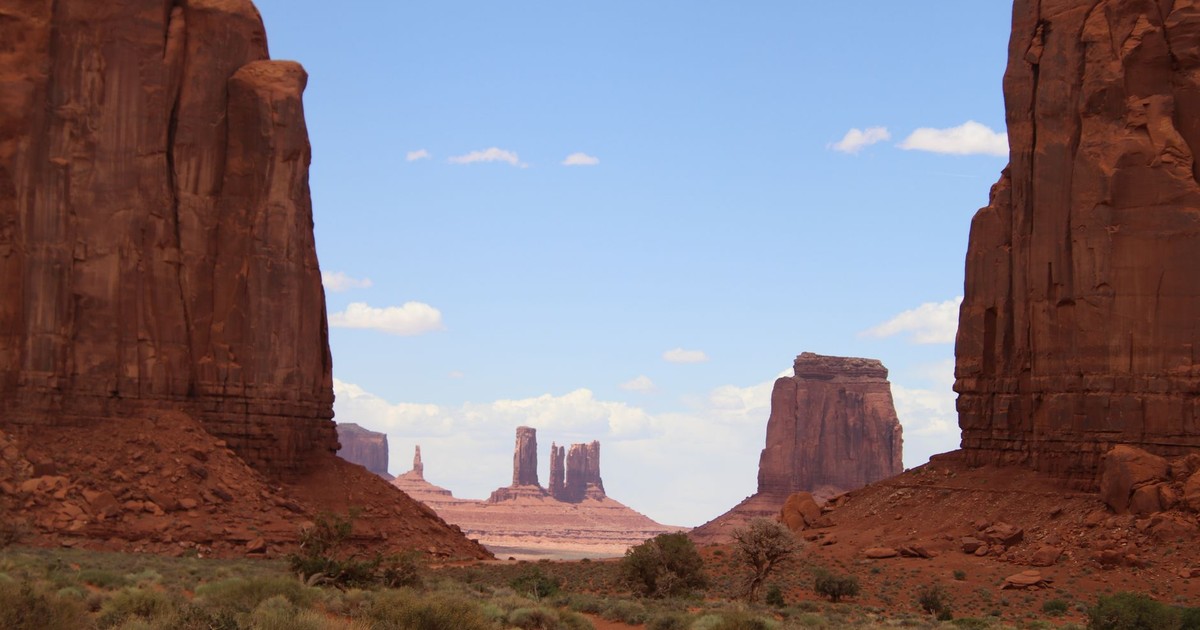
A pair of buttes rise from the red rock canyon country of southeastern Utah, so symmetrical and distinctive that every Indigenous nation that has lived near them for thousands of years gave them the same name in their own language. The four Native American names listed in the original presidential proclamation – Hoon’Naqvut, Shash Jáa, Kwiyaghatʉ Nükavachi, Ansh An Lashokdiwe – all carry the same meaning: Bears Ears. On July 13, 2026, President Trump signed two proclamations inside the Oval Office that stripped more than 90 percent of the federal monument protection from those buttes and the landscape surrounding them, along with an equally vast stretch of territory to the west known as Grand Staircase-Escalante.
The proclamations reduce Bears Ears from 1.36 million acres to 121,096 acres, a cut of 91 percent, and Grand Staircase-Escalante from 1.87 million acres to just 181,541 acres, a cut of 90 percent. Combined, the reductions remove a total of three million acres from national monument designation, virtually eliminating both monuments. The scale is difficult to picture, but the comparison that Utah’s own governor offered at the signing table helps: the monuments as designated were bigger than the state of Delaware. What remains after the cuts is a collection of small disconnected units – just the most photogenic fragments of landscapes that once stretched across the far corner of the Colorado Plateau.
Trump signed the proclamations in the Oval Office surrounded by all six members of Utah’s congressional delegation, as well as Governor Spencer Cox and state House Speaker Mike Schultz. He framed the action as a correction of what he called unfair land policy, telling reporters the move was giving land back to the people of Utah. That framing immediately drew pushback from the tribes who had spent years working to create one of the two monuments in the first place.
What Bears Ears Actually Is
The Bears Ears Inter-Tribal Coalition is composed of five member tribes – the Hopi Tribe, Navajo Nation, Ute Mountain Ute Tribe, Ute Indian Tribe, and Pueblo of Zuni – that advocated for the monument’s creation in a campaign that was unique and truly unprecedented. Tribes had never before petitioned for a presidentially declared national monument. President Obama issued Proclamation 9558 on December 28, 2016, establishing Bears Ears National Monument in Utah and reserving approximately 1.35 million acres of federal land.
The landscape these tribes fought to protect is not simply scenic. Nearly 100,000 archaeological and cultural sites were covered by the proclamation, including House on Fire and Moon House ruins. Its canyons, mountains, and rivers hold hundreds of generations of stories etched in stone, sculpted in pottery, and cemented in cliff dwellings, granaries, kivas, and petroglyphs. The Bears Ears Inter-Tribal Coalition applauded the designation as a chance to preserve lands for Native people and for future generations of Americans.
Grand Staircase-Escalante has a different origin story. Then-President Bill Clinton designated Grand Staircase-Escalante as a national monument in 1996 under the Antiquities Act, a law from the turn of the 20th century that allows presidents to unilaterally set aside public land as national monuments to protect landmarks or objects of “historic or scientific interest.” Conservationists argued the monument preserved one of the country’s largest intact landscapes, along with an extraordinary fossil record that has since produced discoveries of dinosaurs and other species previously unknown to science. Both monuments also sit on top of something the current administration finds more compelling than fossils or cliff dwellings: mining interests had long objected to Grand Staircase’s designation because it complicated plans to develop coal deposits beneath the Kaiparowits Plateau, and the Bears Ears proclamation specifically calls out copper and uranium in the area, describing them as critical to national security.
The Tribes Were Not Consulted
Tribal leaders representing the Grand Staircase-Escalante monument said their tribes “were not informed of or asked about this decision,” according to Autumn Gillard, a member of the Southern Paiute tribe and coordinator of the Grand Staircase-Escalante Inter-Tribal Coalition.
The action effectively dismantles a landmark co-stewardship framework without consulting the affected tribes, disregarding the federal government’s trust responsibilities and treaty obligations. The proclamation also terminates the Bears Ears Commission despite years of collaborative work between its member tribes, the Bureau of Land Management, and the U.S. Forest Service. Davina Smith-Idjesa, co-chair of the Bears Ears Inter-Tribal Coalition and a representative of the Navajo Nation, described how Diné families in communities from Navajo Mountain to Aneth continue sacred traditions of prayer, medicine gathering, and ceremony in the Bears Ears landscape, saying the decision “dishonors generations of care and weakens the unity we’ve built to safeguard Bears Ears for everyone.”
According to a poll released in January 2025 by public opinion research firm New Bridge Strategy, surveying 500 registered voters across Utah, 89 percent of voters support Native American co-stewardship of ancestral lands, and four in five favor keeping the landmark collaborative management agreement between tribes and land managers in place for Bears Ears. According to the same poll, conducted by Republican polling firm New Bridge Strategy, 71 percent of Utah voters across party lines support continuing to keep Bears Ears as a national monument, and 74 percent support continuing to keep Grand Staircase-Escalante as a national monument.
This Has Happened Before – and It Ended in Court
For the second time in the past decade, two Utah national monuments have had their protections dramatically reduced by the Trump administration. In 2017, during his first term, President Trump led the largest rollback of public land protections in history, slashing Bears Ears and Grand Staircase-Escalante national monuments by 85 and 47 percent, respectively. Environmental groups and the tribal coalition sued, arguing that the Antiquities Act gave presidents the ability to establish and expand monuments but not shrink them. Before courts could rule, however, President Biden signed a proclamation on October 8, 2021, restoring Bears Ears National Monument to its full, original boundaries.
On June 23, 2026, the U.S. Court of Appeals for the Tenth Circuit issued a decision reversing the U.S. District Court for the District of Utah’s dismissal of the lawsuits seeking to dismantle the Bears Ears and Grand Staircase-Escalante National Monuments, sending Utah’s legal challenge back to a lower court to determine whether monuments as large as these are permissible under the Antiquities Act. Trump signed his new proclamations three weeks later. The Antiquities Act expressly authorizes presidents to establish national monuments, but it does not explicitly address whether later presidents may shrink or abolish them.
Heidi McIntosh, managing attorney for Earthjustice’s Rocky Mountain Office, stated: “President Trump’s attack on Bears Ears and Grand Staircase-Escalante National Monuments is just as illegal today as it was in 2017. The Antiquities Act authorizes presidents to designate national monuments, not to destroy them. Today’s proclamations are a slap to the face of public lands visitors across the country, as well as the local communities and Tribes that have worked for years to protect these special places.” Earthjustice confirmed the Antiquities Act “does not give them the power to shrink the monuments created by their predecessors.”
The Hopi Tribe, Pueblo of Zuni, and Ute Mountain Ute Tribe, represented by the Native American Rights Fund, continue to fight to protect Bears Ears National Monument. Many of the same plaintiffs from 2017 say they intend to resume their suits. The question of presidential authority could now reach the Supreme Court. Chief Justice John Roberts made clear in a statement in an earlier case about presidential authority under the Antiquities Act that he is “skeptical” about the president’s power to designate large monuments like Bears Ears.
What the Administration Says – and What the Facts Show
The White House framed the reductions as “rightsizing,” stating that the specific landmarks, structures, and objects of historic and scientific interest the Antiquities Act safeguards will continue to be protected, while the surrounding lands not relevant to those specific objects will now be available for multiple-use, sustained-yield management.
During the signing, Trump stated: “You can’t go hunting, you can’t go fishing, you can’t do anything, you can virtually not even walk on it.” In fact, Bears Ears and Grand Staircase explicitly allow hunting, fishing, and outdoor recreation inside the monuments, something that the State of Utah’s own hunting regulations confirm. Monument status restricts industrial activity – new drilling, hard-rock mining, and commercial resource extraction – and Trump’s proclamations cut Bears Ears from 1.36 million acres to 121,096 acres and Grand Staircase-Escalante from 1.87 million acres to 181,541 acres, opening the newly de-designated land to exactly those uses.
Senator Mike Lee told the Deseret News he began conversations to shrink the monuments shortly after Trump was reelected a year and a half ago. Those conversations led to meetings with local stakeholders and officials at the Interior Department. “There’s a lot that you’ve got to get right when you do this and we wanted to make sure that we undertook each step carefully,” Lee said. Critics noted, however, that tribal nations were not among those stakeholders.
The order walks back years of cooperation between the federal government and Indigenous leaders. The five-tribe Bears Ears Commission – representing the Hopi Tribe, Navajo Nation, Ute Indian Tribe of the Uintah and Ouray Reservation, Ute Mountain Ute Tribe, and the Zuni Tribe – had been working with federal agencies through a historic cooperative agreement to collaboratively manage Bears Ears, a framework the proclamation now terminates.
Following a public comment process, a new management plan was finalized in October 2024 to ensure that the monument is managed for its unique and extraordinary values, and in collaboration with the Five Tribes of the Bears Ears Commission. Trump’s proclamations discard that plan along with the three-year intergovernmental process that produced it.
Beyond the cultural loss, conservation advocates are concerned about the physical landscape. Jackie Grant, who directs Grand Staircase Escalante Partners, said she’s especially concerned about the monument’s wilderness study areas, calling the action “laying the groundwork to further degrade and develop the national monument by opening up other areas that we thought were protected to development and extraction.”
Under the terms of Trump’s proclamation, the changes are expected to go into effect within 60 days, on September 11, 2026. That 60-day window is now the key timeline for legal challenges: the Native American Rights Fund has restated its commitment to representing the Hopi Tribe, Pueblo of Zuni, and Ute Mountain Ute Tribe in court and has vowed to pursue every available legal course of action.
What Happens Next
The maps have been redrawn, but whether they stay that way depends almost entirely on courts. The Antiquities Act’s central ambiguity – whether a president who did not create a monument can shrink it – has never been definitively settled by a federal court. Biden restored both monuments before courts could rule in 2021, and the same legal question that went unanswered then is now alive again, with the stakes considerably higher.
According to a Congressional Research Service analysis of the Antiquities Act, of the 21 presidents since 1906, 18 have used the authority to proclaim a total of 168 monuments, including marine areas. A Supreme Court ruling that a president could abolish a national monument would put every one of those designations at risk from a future president with different priorities – unless Congress had separately acted to protect them.
The five tribal nations of the Bears Ears Commission remain committed to protecting the landscape as a sacred ancestral homeland that existed long before any monument designation. The Bears Ears Inter-Tribal Coalition – the partnership between the Hopi, Navajo, Ute Indian Tribe, Ute Mountain Ute, and Zuni governments – has maintained from the beginning that these lands were designated to preserve them for Native people and for future generations of Americans. Federal courts will now decide whether the Antiquities Act permits what the Oval Office has attempted.
AI Disclaimer: This article was created with the assistance of AI tools and reviewed by a human editor.