
Google fully acquired the Debug Project in December 2024, and the program’s ambitions have since expanded in a way that’s catching the attention of scientists, regulators, and the public in equal measure. In 2025 alone, the tech giant filed two separate applications with the U.S. Environmental Protection Agency seeking permission to release a combined total of up to 96 million lab-bred male mosquitoes across Florida, California, and New Jersey between 2026 and 2028. The number most widely reported – 64 million – refers to one of those two permit applications, targeting California and Florida specifically. The word “infected” in the headlines is technically accurate, but the biology behind it tells a very different story than the alarm suggests.
The mosquitoes at the center of this plan carry a bacterium called Wolbachia, a naturally occurring microbe with no exotic origins. Wolbachia is a maternally inherited bacterium commonly detected in approximately 50% of arthropod species, according to a 2024 study in Frontiers in Tropical Diseases. It’s already living in insects in your backyard. Wolbachia bacteria cannot make humans or animals sick, and the risk to the environment from large-scale releases is negligible, according to a June 2026 fact-check by Snopes. What makes the Debug Project unusual isn’t the bacterium itself – it’s the scale at which Google is proposing to use it, and the diseases it’s aiming to stop.
Mosquito-borne illness in the U.S. is not a hypothetical threat. The CDC reports that West Nile virus is the leading cause of mosquito-borne disease in the continental U.S., with over 51,000 symptomatic cases recorded since the virus first arrived in the country in 1999. Dengue is gaining ground, too. In 2024, Florida reported 91 locally acquired dengue cases, along with more than 1,000 travel-associated cases, according to the CDC. Across the wider Americas region, dengue cases reached 13 million in 2024, up from 4.6 million the year before – a near-tripling in a single year, with 8,200 deaths. Against that backdrop, Google’s mosquito plan starts to look less like a tech company playing God and more like a response to a worsening public health problem.
How Google’s Debug Infected Mosquitoes Actually Work
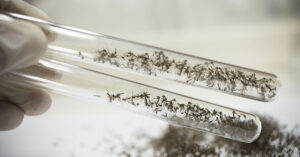
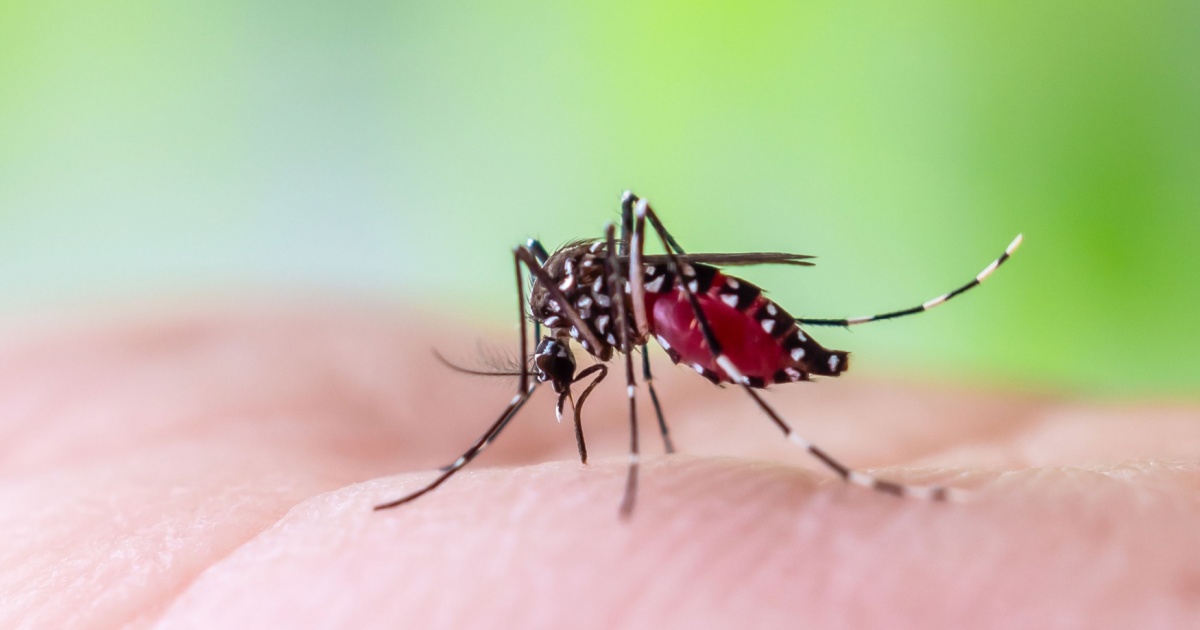
The Debug initiative releases sterile male mosquitoes into the wild to control populations and reduce virus transmission risk to humans. The mechanism is simple. Only female mosquitoes bite, because they need blood to develop their eggs. Male mosquitoes don’t bite at all. So releasing males – even tens of millions of them – doesn’t add any new biting risk to a community.
What the released males do instead is mate. When a male mosquito carrying Wolbachia bacteria mates with a wild female, her eggs do not hatch, meaning population sizes decrease. Repeat that process across enough mating cycles and the local population of disease-carrying mosquitoes collapses. Debug uses AI and robotic technologies that make breeding and sex-sorting mosquitoes much cheaper and easier than traditional methods, allowing the project to operate at a scale that wasn’t previously feasible.
In June 2025, the EPA received an application from Google to release 64 million sterilized male mosquitoes carrying Wolbachia bacteria into California and Florida across two years, specifically targeting the Culex quinquefasciatus species – the southern house mosquito – using the Wolbachia pipientis wAlbB bacterial strain. Culex quinquefasciatus can transmit diseases including West Nile virus, St. Louis encephalitis, and lymphatic filariasis. A second application, received by the EPA in October 2025, sought permission to release 32 million sterile male mosquitoes carrying the wPip strain of Wolbachia in Aedes albopictus mosquitoes across New Jersey, Florida, and California – a species capable of spreading dengue, Zika, chikungunya, and yellow fever.
According to documentation in the Federal Register, the EPA is currently reviewing Google’s Experimental Use Permit applications under the Federal Insecticide, Fungicide and Rodenticide Act. The regulatory agency described the permit application as potentially being of “regional and national significance.” At the time of writing, no permit had been granted.
This Isn’t Google’s First Release – and the Results Matter
The Debug Project didn’t start with a proposal. It started with a pilot. In 2017, one million mosquitoes were released per week over 20 sessions in two Fresno County neighborhoods, with the project running through the summers of 2017 to 2019. That earlier effort, run by Verily (then an Alphabet subsidiary before Google acquired Debug outright in December 2024), targeted Aedes aegypti – the primary mosquito responsible for dengue transmission. In Fresno County, the population of disease-carrying mosquitoes was reduced by 93% to 95%, and the EPA approved the project as safe for the environment.
The Singapore results are even more striking. Google’s Debug has supported Singapore’s national Project Wolbachia since 2018. A 2026 Lancet Western Pacific study reported an estimated 80 – 90% reduction in vector populations and more than 70% reduction in the risk of dengue in treated areas. A separate 2026 analysis found that people living in treated neighborhoods were 80 – 90% less likely to encounter wild Aedes aegypti mosquitoes, with dengue incidents dropping more than 70% after just six to 12 months of releases. More than 10 million male Wolbachia mosquitoes are now released every single week in Singapore as part of the ongoing program.
The World Mosquito Program, a separate initiative that uses Wolbachia-carrying mosquitoes across multiple countries, has protected over 16.1 million people through similar releases as of early 2026. The technique has been in active use for mosquito control since around 2011. Eric Caragata, an assistant professor at the University of Florida who studies Wolbachia for mosquito control, has published extensively on the method’s field application – his research profile at UF’s Florida Medical Entomology Laboratory documents more than a decade of Wolbachia work. This is not an untested experiment – it’s a scaled-up application of a method with over a decade of field data behind it.
What Scientists Are Actually Worried About
The scientific community is broadly supportive of Google’s approach, but that doesn’t mean the concerns circulating online are entirely without foundation – they’re just mostly misframed.
Karthikeyan Chandrasegaran, an assistant professor at the University of California, Riverside who studies mosquito ecology, told Live Science that “Wolbachia-based strategies are generally species-specific and do not introduce novel toxins into the environment,” adding that Wolbachia is “a naturally occurring bacterial symbiont rather than a genetically engineered organism.” This program does not involve genetic modification. The mosquitoes being released carry a naturally occurring bacterium – they have not had their DNA rewritten.
A 2024 research review by scientists in Colombia and the University of California at Santa Cruz found the Wolbachia approach to be “much more environmentally friendly and can be effective in the medium/long term” compared to genetic modification, but also identified a “moderate potential risk of spreading potentially dangerous genes into the environment.” The researchers also noted that releasing males at scale limits the geographic area that can be effectively treated, making populations highly vulnerable to mosquitoes migrating in from untreated surroundings – and requiring continuous weekly releases to maintain population suppression. That review was published in Acta Tropica in late 2024, co-authored by researchers from Colombia’s Corporación Innovation Hub and UC Santa Cruz’s Department of Microbiology and Environmental Toxicology.
Debug is developing an AI-computer vision system to separate males from females before release, but the process carries real technical risk. The World Health Organization’s Vector Control Advisory Group has yet to recommend a specific mosquito-sorting system, in part because standard sex-sorting methods still had a female “contamination rate” as high as 0.3% as of 2024. Releasing even a small number of Wolbachia-carrying females can undermine the sterilization effect by introducing the bacterium into wild female populations, where it allows infected females to reproduce normally. Google’s use of AI-driven sorting is designed to reduce this risk – but it’s a technology still maturing in field conditions.
Nathan Burkett-Cadena, an ecologist at the University of Florida, offered a practical boundary for the debate, speaking to Live Science: “Aedes aegypti is not native to California or Florida, so no animals rely on it for food. If Google began to target native mosquito species, then I would be concerned with cascading environmental consequences.” The species targeted in both applications are invasive – they have no ecological niche in the U.S. that would be disrupted by their decline.
The Dengue Threat Driving All of This
Dengue is a mosquito-borne viral disease whose symptoms typically begin three to fourteen days after infection, including fever, rash, nausea, and aches. Some people develop complications involving internal bleeding, shock, and death. Florida is not a tropical country, but it’s starting to accumulate a tropical disease burden.
The CDC’s 2025 Health Alert documented 91 locally acquired dengue cases in Florida in 2024 – meaning cases contracted by people who never traveled anywhere. In 2025, that number dropped slightly to 62 locally acquired dengue cases in Florida, but the trend over recent years is upward. Climate change, increased global travel, and urbanization are all pushing Aedes mosquito populations into new regions. Debug’s request specifically targets Aedes aegypti – responsible for spreading dengue, yellow fever, and Zika – in its pending EPA application.
There’s no approved human vaccine for West Nile virus either. Despite veterinary vaccines for horses, no human West Nile vaccine has progressed beyond phase II clinical trials, and none are licensed for use. That leaves population control as one of the few practical levers available to public health officials.
Read More: States That Are Going to Have the Worst Mosquito Problems in 2026 (Ranked)
What to Make of the 96 Million Number
Sixty-four million infected mosquitoes is a number that generates alarm by design – but the actual science underneath it describes a well-documented technique being applied at larger scale by a company with the engineering capacity to do what public health agencies have lacked the resources to attempt. In 2025, Google made two separate applications to release a combined total of 96 million Wolbachia-carrying male mosquitoes across New Jersey, California, and Florida between 2026 and 2028. The EPA has not yet approved either application. Public comment closed June 5, 2026, and the agency will make its final determination after reviewing that feedback.
The operational questions scientists are most focused on are concrete ones: whether the AI sorting technology is reliable enough to prevent accidental female releases at scale, whether releases will be sustained long enough over multiple seasons to hold population suppression gains, and whether communities in treated areas will be meaningfully informed and engaged before releases begin. The Wolbachia method’s global track record – across Singapore, Colombia, Brazil, and Australia – suggests it works. Whether Google’s version of it performs at the scale and in the ecological conditions of American cities is precisely what these experimental permits are designed to test.
If you live in Florida or California, the mosquitoes that may eventually be released near your home don’t bite. The ones already there do – and they’re carrying dengue.
AI Disclaimer: This article was created with the assistance of AI tools and reviewed by a human editor.
Read More: Why Mosquitos But Some People More Than Others