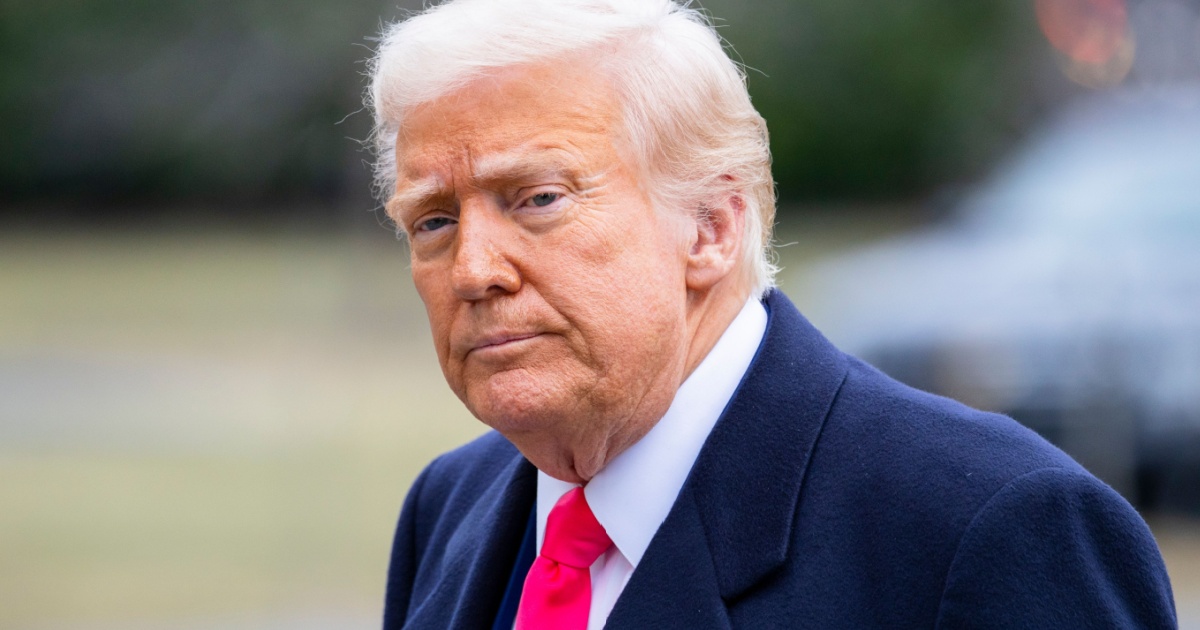

On a Saturday afternoon in July 2026, while White House press pool reporters confirmed he was out on the golf course, President Donald Trump posted a message to Truth Social that left observers doing a double take. Buried at the end of a lengthy, all-caps attack on New York Times reporter Maggie Haberman, he declared that he had “just finished a perfect physical at Walter Reed.” His most recent physical had actually taken place on May 26 – just under two months earlier. There was no new exam. The White House later confirmed he was referring to the one from May.
Haberman had appeared on television that morning, where a host asked her about Trump’s mental acuity. She described the president’s health as “a black box inside that administration much more than almost any other issue.” Trump’s announcement on Truth Social was tacked onto the end of a post raging at Haberman, and after calling her a “loser” and her book a “joke,” he pivoted to bragging about his own health. The combination of timing, context, and factual confusion about when the exam had occurred was what turned a boast into a story about Trump health concerns.
The post did not exist in a vacuum. For much of 2026, questions about the president’s physical condition have followed him from summit to summit, from the Oval Office to the golf cart. The May physical, the bruised hands photographed at NATO, the swollen ankles visible in press photographs from Turkey – each incident has added to a public record that official statements have repeatedly tried to close, and failed to.
What the May 2026 Physical Actually Showed
Trump underwent extensive physical and mental tests at Walter Reed on May 26, including an echocardiogram, carotid artery ultrasound, lung and eye examinations, and blood tests. According to the White House report, his weight came in at 238 pounds – up 14 pounds from his April 2025 exam – putting his body mass index at 29.7, at the very top of the overweight range and just below the threshold for obesity, which begins at 30.
His physician, Dr. Sean Barbabella, described the results as “excellent” following what was the president’s fourth medical examination. Dr. Barbabella noted that Trump had been counseled on diet, physical activity, and continued weight loss. Dr. Bob Wachter, chair of the Department of Medicine at the University of California, San Francisco, observed that it is “quite unusual” for someone without chronic problems requiring close monitoring to receive physicals more frequently than once a year.
As in previous years, the report said Trump scored 30 out of 30 on the Montreal Cognitive Assessment, a test used to detect memory issues or cognitive impairment. Trump has repeatedly framed that score as evidence of exceptional intelligence. That framing is clinically off-target. The MoCA involves tasks such as identifying pictured animals, drawing a clock face, and recalling words given earlier in the test. It detects cognitive decline and dementia. Anyone who isn’t experiencing cognitive decline should be able to pass it.
The test takes approximately 10 minutes to administer, and assesses cognitive domains including attention, concentration, executive functions, memory, language, and visuoconstructional skills. A score of 26 or above is considered normal. Scoring a perfect 30 is genuinely uncommon. During the NATO summit in Turkey in early July, Trump appeared alongside world leaders with his right hand looking swollen and his left hand covered with makeup that appeared to be hiding bruising. Officials said Trump’s bruising is linked to the number of people he meets and shakes hands with regularly, and the White House also pointed to his use of aspirin, which can affect bleeding and bruising because it acts as a blood thinner.
Trump takes two cholesterol medications – rosuvastatin and ezetimibe – along with daily aspirin to lower the risk of heart attacks and strokes. Dr. Barbabella said the aspirin helps explain the noticeable bruises on Trump’s hands, which the report describes as “consistent with minor soft tissue irritation related to frequent handshaking” and “a common and benign effect” of the medication.
The dose involved is not a low-dose regimen. The usual daily preventive aspirin dose is around 80 milligrams. Trump previously took approximately four times that amount – 325 milligrams daily. According to the NHS, people taking low-dose aspirin may experience nosebleeds and bruise more easily – effects that scale with dosage. When Trump appeared at the World Economic Forum in Davos in January with bruising on his left hand – the hand he does not use for handshaking – White House press secretary Karoline Leavitt told reporters that the president had “hit his hand on the corner of the signing table, causing it to bruise.”
For anyone following the effects of daily aspirin on older skin, the pharmacology is straightforward. Aspirin inhibits platelet aggregation – meaning blood doesn’t clot as readily – so any minor trauma to blood vessels near the skin surface produces visible discoloration that takes longer to fade. At 325 milligrams daily, that effect is pronounced.
Chronic Venous Insufficiency and the Swollen Ankles
The bruised hands are not the only physical finding that has drawn sustained attention. One year after being diagnosed with chronic venous insufficiency, Trump’s condition came under renewed scrutiny in July after photographers captured close-up images of his ankles visibly swelling over his shoes during the NATO summit in Turkey.
Chronic venous insufficiency (CVI) is a condition in which the valves inside the leg veins – which normally push blood upward against gravity – become weak or damaged, causing blood to pool in the lower legs. According to official medical reports from the White House, Trump’s hand bruises are partly attributed to his daily aspirin use, which is a mild blood thinner that makes older skin more prone to bruising. The condition affects up to 40 percent of adults in the U.S., and while it is not generally life-threatening, it can limit mobility or lead to painful ulcers and other problems if left untreated.
Apart from golf – during which he is largely driven around in a cart – Trump does not exercise heavily. He also refuses to wear compression socks, which are commonly used by people with CVI. The May 2026 medical report noted that “slight lower leg swelling was noted, with improvement from last year,” after the White House revealed last summer that the swelling was a result of the chronic venous insufficiency diagnosis.
The Transparency Gap
For decades, administrations have released selected results from presidential physicals, offering the public a glimpse at the commander-in-chief’s health. But the results are filtered through the White House and must be approved by the president, raising questions about what the public does and doesn’t get to see.
Physicians reviewing the May 2026 medical report raised pointed questions about what was omitted. The report stated there was “no arterial obstruction or structural abnormalities” – language doctors said could mean only that there was no total blockage, not that the arteries were clean. There is a meaningful clinical difference between “no complete blockage” and “healthy arteries.” The memo didn’t specify how much plaque was revealed by the carotid ultrasound, even though most people have at least some buildup, or whether there was any narrowing of the arteries.
On April 30, 2026, 36 physicians – including neurologists, psychiatrists, and specialists in cognitive disorders from Harvard, Tufts, Columbia, and George Washington University – filed a formal statement entered into the Congressional Record by Senators Sheldon Whitehouse and Jack Reed. The group acknowledged they had never examined Trump but said he was mentally unfit to serve, warning of a “rapidly worsening, reality-untethered, increasingly dangerous decline” based on what they described as “objectively observable signs of serious medical concern.” The White House has rejected those claims in full.
Read More: Trump’s Health Report Says “Excellent” – But Doctors Say Key Data Is Missing
What the Public Actually Thinks – and What Doctors Say
A Washington Post-ABC News-Ipsos poll released in May 2026 found that about 59% of Americans said they don’t think Trump has the mental acuity to serve in office effectively, and 55% said they don’t believe his physical health is strong enough. A separate Reuters/Ipsos poll from February 2026 found that 61% of Americans view Trump as growing erratic with age – including 30% of Republicans and 64% of independents.
Dr. Jeffrey Kuhlman, who served as a White House physician for more than a decade under Presidents Obama, Bush, and Clinton, told STAT News that “concern for the president’s physical health is probably at an all-time high, and advanced physical age is the No. 1 concern.” For a president of Trump’s age, a complete physical would be expected to include advanced heart testing, screening for common cancers, and a cognitive assessment, along with basics like height, weight, and blood pressure, Kuhlman noted.
The White House response to scrutiny has followed a consistent pattern. The New York Times reported that Trump has been holding fewer public events, engaging in less travel, and keeping a shorter schedule – which prompted a furious presidential response attacking the reporter behind the story. When the July 11 Truth Social post misrepresented the timing of his physical, the White House confirmed to reporters that Trump was referring to the exam from May – which had taken place 46 days earlier.
What This Means for You
The conversation around Trump health concerns touches something relevant far beyond the political. When any 80-year-old’s physician declares them in “excellent health,” the more useful question for families is: what did the exam actually measure, and what did it leave out?
A passed cognitive screening test is not the same thing as a clean cognitive bill of health. The MoCA, administered in 10 minutes, screens for dementia – it doesn’t measure processing speed, decision-making under pressure, or the kind of executive function decline that can develop years before dementia becomes diagnosable. If someone in your family is being given cognitive screening repeatedly at short intervals, that’s worth discussing directly with their doctor. Ask specifically whether the re-testing is to rule out impairment or to track its progression. Ask whether a practice-effect correction is being applied – repeated exposure to the same test tends to raise scores regardless of underlying cognition.
The physical findings in Trump’s case – weight gain, visible bruising, leg swelling – each carry a documented medical explanation. But the broader lesson is straightforward: official summaries, even when released publicly, may omit the data that would allow independent assessment. For anyone managing the healthcare of an aging parent, partner, or themselves, the most useful habit is asking for the actual numbers, not just the headline verdict. Blood pressure, lipid panel results, imaging findings, cognitive subtest scores – those are the details that give a real picture. “Excellent” without them is a press release, not a diagnosis.
Disclaimer: This information is not intended to be a substitute for professional medical advice, diagnosis, or treatment and is for information only. Always seek the advice of your physician or another qualified health provider with any questions about your medical condition and/or current medication. Do not disregard professional medical advice or delay seeking advice or treatment because of something you have read here.
AI Disclaimer: This article was created with the assistance of AI tools and reviewed by a human editor.