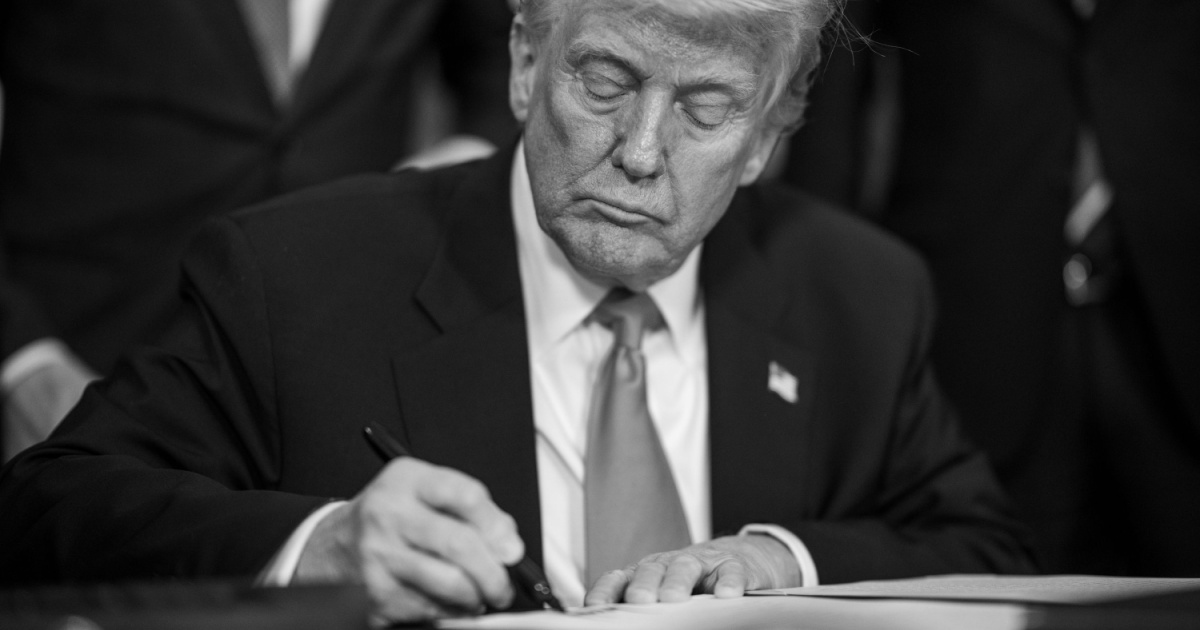

A photograph taken at the NATO summit in Ankara, Turkey, earlier this month stopped a lot of people mid-scroll. Reuters photographer Jonathan Ernst captured a close-up of President Donald Trump’s ankles spilling visibly over his shoes during a bilateral meeting, and the image spread fast. The ankles weren’t just swollen. To many observers, they appeared larger than they had looked at any prior public appearance, including photos taken when the same condition was formally diagnosed a year earlier.
That diagnosis, revealed by the White House in July 2025, was chronic venous insufficiency, or CVI – a condition in which damaged valves in the leg veins can no longer efficiently push blood back toward the heart, causing blood to pool in the lower legs. The White House described it at the time as “benign and common.” But the photos from Ankara told a more complicated story, and they arrived alongside a fresh wave of public concern about Trump’s health concerns that reached well beyond his ankles.
The NATO summit, held July 8, 2026, produced more than just photographs. During a press conference alongside Ukrainian President Volodymyr Zelensky, Trump made three significant verbal errors in under ten minutes: calling Iran “the Islamic Republic of Japan” while speaking next to Zelensky, referring to Zelensky as “President Putin,” then appearing to catch the error and insist he was going to relay reporters’ questions when he spoke to the Russian president later in the day. He also repeated a “tic tac” error – referring to TikTok by that name – which he had also made two days earlier from the White House.
Trump Health Concerns: What the Ankle Swelling Actually Means
One year after being diagnosed with chronic venous insufficiency, the 80-year-old president’s condition came under renewed scrutiny after photographers captured a close-up of his ankles during the NATO summit in Turkey. CVI occurs when veins become damaged and struggle to send blood back to the heart.
The condition usually affects people over age 50, and the risk rises with age. Overall, CVI affects about 1 in 20 adults. Valves in the veins can become damaged, allowing blood to collect and increase pressure in the leg veins over a long period – and that is the defining mechanism of the disease. The signs can appear on the skin: varicose veins, swelling, and changes including dark spots, itchy or scaly skin above the ankle, and, in more advanced cases, hardened, discolored skin and ulcers.
When the swelling intensifies, Dr. Sanjiv Lakhanpal, founder and chief executive of the Center for Vein Restoration, told The Daily Beast that “your legs get heavy, achy, tired.” Since the original diagnosis, Trump has occasionally been observed walking with his legs seemingly dragging or looking wobbly. Dr. Byron Lee, a professor of cardiovascular medicine at Stanford University who spoke with NPR, noted that the swelling and the White House’s stated reason are “reason for further investigation and testing,” adding: “Fortunately, chronic venous insufficiency in itself is not that dangerous. It causes some swelling in your legs, particularly, but it could be a sign of other things going on.”
Without treatment, CVI raises pressure in the leg veins to a point where the smallest blood vessels can burst, causing the skin in that area to take on a reddish-brown color that can easily break open. The condition can be managed if treated in the early stages and is not usually life-threatening, but it can worsen over time and affect quality of life.
For readers who want to understand how vascular conditions interact with cardiovascular aging, Trump’s mortality record covers the broader clinical picture in detail.
The Bruised Hands: Three Explanations, One Unanswered Question
The swollen ankles shared the spotlight at NATO with something else: persistent bruising on Trump’s hands, which the White House attributed to constant handshaking coupled with a heavy aspirin regimen.
White House physician Dr. Sean Barbabella’s memo after Trump’s May 2026 checkup, as reported by NBC News, attributed the bruising to frequent handshaking and aspirin therapy and noted “slight lower leg swelling,” characterized as improved from last year. But the bruising story grew more difficult to explain by December 2025, when Trump appeared with discoloration on the back of his left hand in addition to the more persistent bruise on his right – complicating the White House’s explanation that the bruising came from constant handshaking, given that Trump is right-handed.
Dr. Jonathan Reiner, a professor at George Washington University’s School of Medicine and Health Sciences and a longtime cardiologist for former Vice President Dick Cheney, told CNN that: “Bruising can be just simply a one-off thing when you have some trauma, you bump into something.”
Reiner, who cautioned he has not personally examined Trump, added that he frequently sees similar bruising in patients who take stronger blood-thinning medications than aspirin – raising questions about full medication disclosure. Such medications are common and not necessarily an indication of any bigger health concern. “The question now,” he said, “is less medical than it is transparency.”
Dr. Lee also raised questions about the aspirin regimen itself. “It’s actually interesting he is on [aspirin]. We don’t often routinely recommend it anymore unless you have risk factors for stroke or heart disease,” he told NPR. “And it definitely does cause bruising.”
A Pattern of Verbal Slips
The NATO gaffes were striking partly because of how many occurred in one setting, but also because they fit into a longer pattern of errors across Trump’s second term. Two days before the NATO summit, Trump appeared to mix up Small Business Administration head Kelly Loeffler with musician Nicki Minaj, twice referring to Loeffler’s husband’s wife as “Nicki Minaj who’s so incredible,” before intentionally introducing Minaj two minutes later at the same event.
At a May event celebrating the Indiana University football national championship, Trump asked where head coach Curt Cignetti was – even though Cignetti had been standing right next to him the whole time, and Trump had just looked in his direction.
The mix-ups at the NATO summit echo a similar gaffe made by former President Joe Biden at the 2024 NATO summit in Washington, when Biden introduced Zelensky as “President Putin” before catching himself – a moment that drew heavy media scrutiny and contributed to broader questions about his fitness for office. Trump has not been charitable about politicians’ verbal gaffes – he once played a video of Biden’s verbal stumbles at a 2022 rally, and during the 2024 campaign, he ridiculed Biden for mixing up Trump and Kamala Harris.
What the Official Health Report Says – And What Doctors Question
Trump’s May 2026 health memo said he demonstrated “strong cardiac, pulmonary, neurological and overall physical function.” An AI-enhanced electrocardiogram estimated his cardiac age “to be approximately 14 years younger than his chronological age.” He was counseled to take low-dose aspirin, increase physical activity, and lose weight – the report put his weight at 238 pounds, 14 pounds more than an April 2025 physical.
The visit to Walter Reed was Trump’s third in 13 months – a frequency that raised concerns among some health observers. The White House initially deflected questions about an October 2025 visit before subsequently revealing that Trump had undergone a CT scan to “definitively rule out any cardiovascular issues.” The test revealed no abnormalities.
Reaction to the report within the medical community was mixed. Texas vascular surgeon Dr. William Shutze, speaking to The Wall Street Journal as covered by The Daily Beast, said “that report is almost too good to be true for somebody of his age” and described it as “a filtered narrative.” The memo didn’t specify how much arterial plaque was revealed by the carotid ultrasound, even though most people have at least some buildup at Trump’s age, or whether there was any narrowing of the arteries – details multiple doctors noted were conspicuously absent.
Polling reflects how the cumulative picture has landed publicly. The Washington Post-ABC News-Ipsos poll conducted in late April 2026 found that 59% of U.S. respondents said Trump does not have the mental sharpness to lead, with 55% saying he was not in good enough physical health to serve effectively. A Reuters-Ipsos poll from February found that 61% of Americans agreed Trump has “become erratic with age” – including 30% of Republicans. Just 45% of Americans agreed that Trump is “mentally sharp and able to deal with challenges,” a notable drop from a comparable poll in 2023, when 54% considered him mentally sharp.
Read More: Trump’s Health Report Says “Excellent” — But Doctors Say Key Data Is Missing
What This Means For You
The Trump health concerns story is genuinely newsworthy, but it also functions as a high-visibility illustration of what vascular and cognitive aging look like in practice – for millions of people who aren’t being watched by Reuters photographers.
CVI symptoms overlap with those of other conditions, including diabetes, heart failure, hypothyroidism, lymphedema, and kidney failure – which is precisely why a correct diagnosis matters. If you or someone you care for is experiencing persistent leg swelling, heaviness, or visible bruising that doesn’t trace clearly to an injury, those are not symptoms to attribute to “just aging” without getting a medical opinion. Heaviness, swelling, visible varicose veins, or any skin changes in the lower legs should be examined by a doctor. Sores or ulcers, especially ones that don’t heal, are a clear signal to seek medical attention sooner rather than later.
On the aspirin point: physicians no longer routinely recommend low-dose aspirin as a cardiovascular preventive measure unless a patient has specific risk factors for stroke or heart disease. If you’re taking aspirin daily because someone suggested it years ago, it’s worth asking your doctor whether the current guidance still supports that for your individual situation – and whether it’s contributing to any bruising you’ve noticed.
The larger lesson from Trump’s public medical record isn’t partisan. The conditions under scrutiny – venous insufficiency, medication-induced bruising, declining word retrieval, weight gain, reduced exercise – are conditions that affect millions of Americans over 70. The difference is that most people navigate those changes with a regular doctor and honest conversations, rather than press releases. For CVI specifically, regular exercise, maintaining a healthy weight, and avoiding prolonged sitting or standing are the most evidence-backed steps for slowing its progression. Those levers are within reach for anyone managing similar symptoms, regardless of who their doctor reports to.
Disclaimer: This information is not intended to be a substitute for professional medical advice, diagnosis, or treatment and is for information only. Always seek the advice of your physician or another qualified health provider with any questions about your medical condition and/or current medication. Do not disregard professional medical advice or delay seeking advice or treatment because of something you have read here.
AI Disclaimer: This article was created with the assistance of AI tools and reviewed by a human editor.
Read More: Trump Sparks Health Speculation After Rambling Medical Comments Raise Questions